

If you are a non-British resident or an international student, you may be wondering if you can purchase property in the UK. The short answer is yes, foreigner investors can legally buy property in Britain with no limitations. This applies to purchasing all land and real estate.
While there are some complexities to manage with property investment here in the UK as a non-resident, they can navigated with relative ease once you have the correct information and insight.
Buy A House In The UK
As a foreign or overseas investor, you may buy house in the UK, with or without a visa. (Note that if you want to invest £2 million or more, you need a Tier 1 visa. You must be 18 or older, able to prove funds belong to your and/or partner and have an account at a regulated UK bank).
You can also apply for a mortgage in the UK as a non-resident, however this can sometimes be a challenging process. Some lenders are not keen on letting foreign nationals borrow money due to increased risks, so you may see higher interest rates or larger deposit requirements. As always, your income and credit score plays a large role in your ability to secure a mortgage.
You can also invest in the UK property market with a mortgage secured from outside of the UK but that would be a decision for the lender and not a stipulation of buying property in Britain.
Please be aware that purchasing a residential property in the UK will not give the investors residency in the UK. The UK government does not grant residency or citizenship in return for investment.
Another key piece in this process is making sure you have the necessary documentation, proving your identity and funding. This includes:
- Proof of Identity (e.g. passport or driving license)
- Proof of Address (e.g. driving license, utility bill or bank statement)
- Source of Funding (e.g. payslip or tax return to show where your money is from)
Having these readily available is essential as you may need to produce them at various stages of the purchase process.
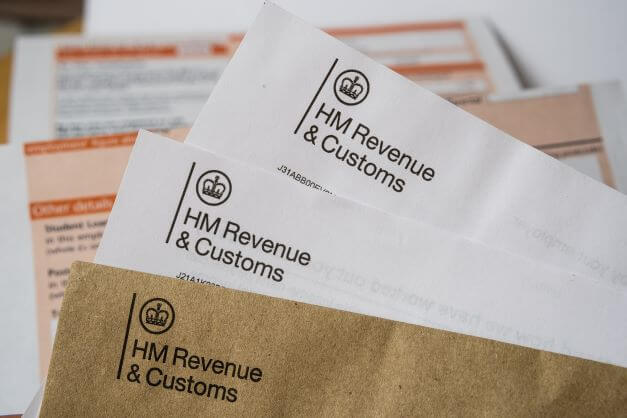
What About Taxes?
Be prepared by knowing what types of taxes to which you will be subject in the UK. Property investment has additional taxes for you to be aware of before you consider an investment into the UK property market. These include:
Income Tax
Any money that you earn in the UK is taxable; this includes rental income if you are interested in renting your home to tenants. You will only be taxed on the income you earn in the UK.
You may also need to pay tax if you make a gain when you sell property or land in the UK.
Stamp Duty Land Tax
Just as UK residents are required to pay stamp duty, so will you as a foreign buyer. Stamp duty is a fee paid upon purchase of a property. There is an allowance, though, so no stamp duty is due if the property was purchased for £250,000 or less. If you are a first-time buyer, this allowance increases to £425,000.
From 1 April 2021, different rates of Stamp Duty Land Tax were applied to purchasers of residential property in England and Northern Ireland who are not resident in the UK. The rates are 2 percentage points higher than those that apply to purchases made by UK residents.
The current rates were brought into effect 22 September 2022 and can be found on the UK Government website.
| Property value | SDLT rate |
|---|---|
| Up to £250,000 | Zero |
| The next £675,000 (the portion from £250,001 to £925,000) | 5% |
| The next £575,000 (the portion from £925,001 to £1.5 million) | 10% |
| The remaining amount (the portion above £1.5 million) | 12% |
For homes purchased for between £250,001 to £925,000, the stamp duty rate is 5%. For homes purchased for £925,001 to £1.5 million, it is 10% on the value over £925k only). For homes purchased for over £1.5 million, the rate is 12% for any value over that amount
The rates change on second properties that are not your primary residence as follows:
| Property value | SDLT rate |
|---|---|
| Up to £180,000 | 4% |
| £180,001 – £250,000 | 7.5% |
| £250,001 – £400,000 | 9% |
| £400,001 – £750,000 | 11.5% |
| £750,001 – £1.5 million | 14% |
| The remaining amount (the portion above £1.5 million) | 16% |
As a foreign buyer, you will also need to pay an additional 2% surcharge.

Capital Gains Tax
The CGT is a tax on the profit you make from selling your property. It depends on how much the value has grown from when you purchased it to when you sold it.
You must pay the non-resident capital gains tax if you are a non-UK resident, non-resident trustee, non-resident in a partnership or representative of a non-resident who has died. How much can you expect to pay? For residential property, it is 18% or 28%, depending on your income level. For non-residential property, it is 10% or 20%.
Inheritance Tax
If you have inherited a property, you may be subject to the inheritance tax. This is set at 40% but it applies only to properties that are worth over £325,000. If your property is worth £400,000, for example, you will only pay taxes on the £75,000 that extends over that threshold.
If you want to buy property in the UK as a non-resident, be aware that there are some complications that may arise. It is best to seek advice from an experienced property investment company or estate agent to ensure you navigate the process accurately and successfully.
The UK is a great place to live and invest into the property market. House prices have regularly increased making the UK a relatively safe place for any potential property investor.
There are some restrictions for overseas investors but they can be easily dealt with the help of professionals.
All property investment companies in the UK have to be registered as a limited company with companies house Companies House – GOV.UK (www.gov.uk) and are regulated by the FCA as part of UK law.
If you used your time to research then UK property investment should be beneficial to you. The market is growing positively, and people investing in cities like Manchester, Liverpool and Leeds can secure huge annual gains thanks to its booming market. However, this is not the only income you can count on.


